Well somebody does if we think a bit about the statistics that we just received for our year ending June 30, 2011. Despite being open 25% fewer hours over last year due to budget driven closures of Reiche and Munjoy Branches last July, PPL system visitors (633,854) hit record levels as did the lending of print and digital materials (1,089,338).
List those markers of activity along with our raising a record amount for our annual fund $119,120 from 725 donors then it is clear that we are headed in the right direction.
The budget process that concluded in the spring for this year held a critical outcome for us. The City made a commitment to provide the funds to stabilize the number of locations in the library system by funding the Riverton Branch. We are delighted with that support and beginning August 5th we will remodel the Branch to make it a more responsive and attractive location for library users.
Our thanks to our partners, library users, donors, Friends of PPL, volunteers and funders such as the City of Portland for their belief in Portland Public Library. As the Executive Director it is always my privilege to thank the staff and Trustees for their commitment and passion for the work that we do.
Friday, July 29, 2011

Wednesday, January 5, 2011
A Reader is a Reader is a Reader!
We have recently been asked by media and individuals our opinion about the surge that eBooks have experienced as a reading source and how that might affect libraries. Below are our answers to those questions. Regardless of what you think of the technology and format from our perspective the more readers the better!
1. What steps, if any, is PPL taking to accommodate eBooks and eReaders?
Recently, we provided start up funds and now participate in the statewide initiative for eBooks through a service called Overdrive. With your library card, you can begin to utilize popular eBooks or Downloadable audio books through the Maine InfoNet Download Library listed on our website (www.portlandlibrary.com) This service complements our other eBook resources such as Tumble Readables and Tumble Books available on our website and geared toward children that are being used thousands of times per month.

We have been providing eBooks for a number of years but they have tended toward reference titles such as languages, dictionaries, encyclopedias, handbooks, etc. You can find those in the PPL catalog online on our home page.
2. How do you think eBooks can, and are, changing public libraries? Would you go so far as to say eBooks will revolutionize public libraries? If so, how? Fewer books? More computers?
 It is pretty clear based on rising sales figures for eBook and eReader purchases, as well as “mentions” in the popular press that we have reached a tipping point in the acceptance of eBooks. Popular acceptance, or at least widespread curiosity, was confirmed for us just recently as 55 people showed up (with approximately 10 days notice) to a program at PPL to demonstrate eReaders and how to acquire eBooks. (See information on this event through CTN's link)
Having said that, I am not sure that the revolution is as much about public libraries as it might be about reading itself. PPL’s City of Readers Team has a mission to create a culture of reading in Portland. Whether that reading engagement with the printed word comes through print, audio or through digital download doesn’t concern us. The future of reading conversation is not the same as the future of the book. So for us at PPL we are excited that there is a developing world of convenience, value and enthusiasm that takes advantage of electronic devices utilizing literature of all types.
 The tendency of folks to engage in “either / or” scenarios regarding the future of public libraries each time a significant technology event occurs is very familiar. We have been through it with computers, compact discs, DVD’s, etc. Libraries have always existed in a rather messy format world of concurrency whereby we offer various formats at the same time. Call it a “long tail” phenomena if you’d like but the fact is that our full range of users tend to use various formats for a long term, often well past their announced demise by pundits. So what public libraries do is participate in the changes that come to our society – like eBooks - and brilliantly incorporate those while holding on to useful resources that might appear at first glance out of date but remain quite valuable to our users.
 We are discussing creating downloading stations as many eBooks still do require being downloaded to a computer and then transferred to a device. However, in general, I don’t see many more computers of desk top size or profile being required, as the overwhelming momentum for eBook use is on hand-held devices, whether it be smart phones or dedicated readers which are light, portable and which pack tremendous power. There is real instability right now in the eBook world whether we are talking about formats of eBooks or what an eReader will or won’t read at present. This is confusing and frustrating to everyone. There is also a more immediate concern for libraries and that is the struggle that publishers are facing in creating a business model that makes sense in this environment. A price will eventually devolve from that model and that will determine how many eBooks PPL can afford to have available to our users.
Librarians are trying to have a voice in some of these debates. This fall PPL hosted a forum for the staffs of Maine’s larger libraries that featured an address by Tom Allen, President & CEO of the Association of American Publishers concerning the current state of publishing and what it might mean for libraries.
 I agree that there will be fewer physical books in the future but among the fewer, many will be older titles that when needed are important to have but the delivery will be quicker and the storage cheaper when it is in digital format. This is clearly being played out as Google Books becomes more and more a force both in the marketplace and how libraries will choose to manage physical collections going forward. For us at PPL, knowing that our collections have the potential to expand by millions pushes us to make sure that the collections can be found in the digital environment and that what we do collect has a higher degree of likelihood of being used multiple times while on the shelf.
3. If a significant number of readers switch to eBooks, do you think the library will notice a drop in number of people who physically visit the library?
I think if reading grows overall because of convenience due to portable reading devices through which folks can also acquire content from the library or commercial sources that will be a great thing. I don’t think necessarily that means fewer people in the library because of the large and varied types of things that we offer beyond borrowing printed books. But I think it will be a more a case that if someone is now reading eBooks then they will enjoy reading for its own pleasure and benefit but the physical book will still be a big player in the arsenal of a reader. It will remain another option or format.
 Whether less people will visit the library is an interesting point to ponder. Prior to our renovation of the Main Library, Portland Public Library was the most heavily visited cultural organization in Maine with close to 620,000 visits annually to all of our locations. We are on record setting pace again now that the Main Library is reopened with over 37,425 average visits per month at that site alone. This speaks to the complexity of the public library and its relationship to its community which extends well beyond lending materials. People use PPL for many things and reasons whether attending programs, using technology, or simply experiencing the library as a public space to appreciate art, architecture and to be part of the social community.
4. Do you believe the eBooks will ever wholly and completely replace the physical book?
 No. I say this not in knee jerk reaction as a book lover and not at the expense of the value of eBooks nor in opposition to the embedded caution and maybe even good sense of “never say never.” There is something special and clearly different about a printed book; it is undeniable. It is a different kind of sensory experience – visual, tactile, smell, etc. - it is portable, needs no power source and is tremendously tolerant of run of the mill environmental conditions. People often say that young people don’t read books. That is not supported by library lending nor anecdotally. My son’s generation (“20 somethings”) grew up with all manner of technology and certainly use it aggressively now but they also still read books. I am discovering that is not unusual. (If you love to read you’ll read the comics, graphic novels, cereal boxes, e-Books, box scores, free newspapers, novels, information on the computer, etc. - whatever.) It seems that the book has so many basic advantages and positive visceral qualities going for it that I think it will be around for a long time to come.
Friday, December 10, 2010
How it gets on the shelf...
Each year the Library funds its ability to buy materials of all kinds (print, media, electronic, etc) for every age and type of user through money from the endowment, fees and donations, most notably the Annual Fund. This year’s collection budget will depend on the Annual Fund to provide approximately 25% of the total budget. Our goal is $115,000 and right now we are more than a third toward reaching it. December is a critical month to expand our current total of approximately $45,000

Our friends at VOX Gallery are donating 20% of the sale of each photograph sold from the show, “Vox Photographs: Art Nouveau/New Work.” If you haven’t seen this show in our Lewis Gallery
So, buy a great work of art, or send us a check or donate online and take some great and deserved joy as you give the gift of reading this holiday season.
Monday, November 1, 2010
Kids and E-Resources
For the past few years’ business at PPL has been growing and with the newly renovated main library the trend continues. Attendance and borrowing of collections under the roof at our 4 locations are one source of increased activity but there is also a significant increase in the past year in use of “e-resources” by the general public.
 No where is this better illustrated than the statistics for October for TumbleBooks and TumbleReadables which are both available through our website (http://www.portlandlibrary.com/kidsplace/tumblebooks.htm). Both of these products are designed to develop a love of reading (TumbleBooks) and to encourage early readers (TumbleReadables). TumbleBooks also has a feature to allow you to view the site in French or Spanish thus facilitating native or second language development. October use figures have shown a dramatic increase over October 2009. TumbleBooks use grew by over four fold from 3,691 views in 2009 to over 16,200 this October, surpassing 10,000 monthly views for the first time. Tumble Readables use went up 41% (1,299 views versus 919 in October 2009).
It is clear that in the past few months’ that e-books and other non print materials have begun to gain a foothold with our users. Even so, borrowing of books continues to be a strong indicative of the historical situation in libraries whereby all types of formats are used concurrently and often for long periods of time.
The PPL catalog now includes eBooks for downloading. PPL, as it did in the case of the downloadable audio books, assumed a leadership position in providing leadership funds for the both products to then benefit of our users.
Monday, October 18, 2010
Batter Up
I am unapologetically a sports fan and am now in the process of a quickening immersion in the MLB playoffs now that my Phillies are in the National League Championship Series. Sport is a great thing and at its most basic level (on the playground, track or on the field), I sometimes think it is one of the last uncomplicated pleasures. It is also a great and unending source of material for writers of kids’ books, game instruction, history and novels (think The Natural and Loneliness of the Long Distance Runner). It is great stuff to talk about, to argue about and to learn from; much of it is also timeless and reflective of larger societal trends.
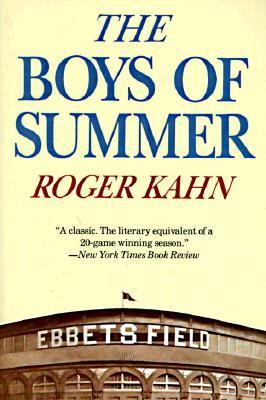
 So beginning Tuesday, November 9 from 7:00 PM – 8:30 PM, I will host the first meeting of a monthly sports book (reading not betting) group at the Community Room at the Reiche Community Center. We will cover all kinds of sports over the course of monthly meetings. In homage to the end of baseball season we will begin with Roger Kahn’s Boys of Summer a book that is by turns factual, comic, tragic and inspiring. You’ll learn something about baseball but also about a New York City that up until the late 50’s hosted both the Dodgers and Giants along with the Yankees. Baseball players lived very different lives then and were more accessible and human from the view of a fan.
If you are interested in participating please drop an email to me at podgajny@portland.lib.me.us.
If you are interested in participating please drop an email to me at podgajny@portland.lib.me.us.
Monday, September 27, 2010
At the Heart of PPL
 One of the key objectives of the first phase of the renovation of the Main Library was to give us the chance to fully express our role as a cultural center by providing appropriate physical spaces. This imperative was not in response to “wouldn’t it be nice” thinking but in fact a reflection of what the Library is now and an effort to meet the expectations of what it needs to be in the future. It is clear that as this City and Library have evolved over the past decade becoming more diverse, dynamic and complicated one of our essential roles in the public sphere is to help strengthen and promote the cultural fabric of
Our prominent position as an anchor of one end of the Arts District engenders a responsibility and an opportunity to enliven Monument Square at all times of the day and in all seasons. Part of that energy is generated by the transparency of the architecture as library users are seen from outside and they in turn engage outwardly with the city. The comings and goings of the library as cultural center include art exhibits, lectures, music and support of the development of public policy and consensus as shown most recently in the exhibition, reception and opinion gathering for the design of the new benches for the Bayside Trail.
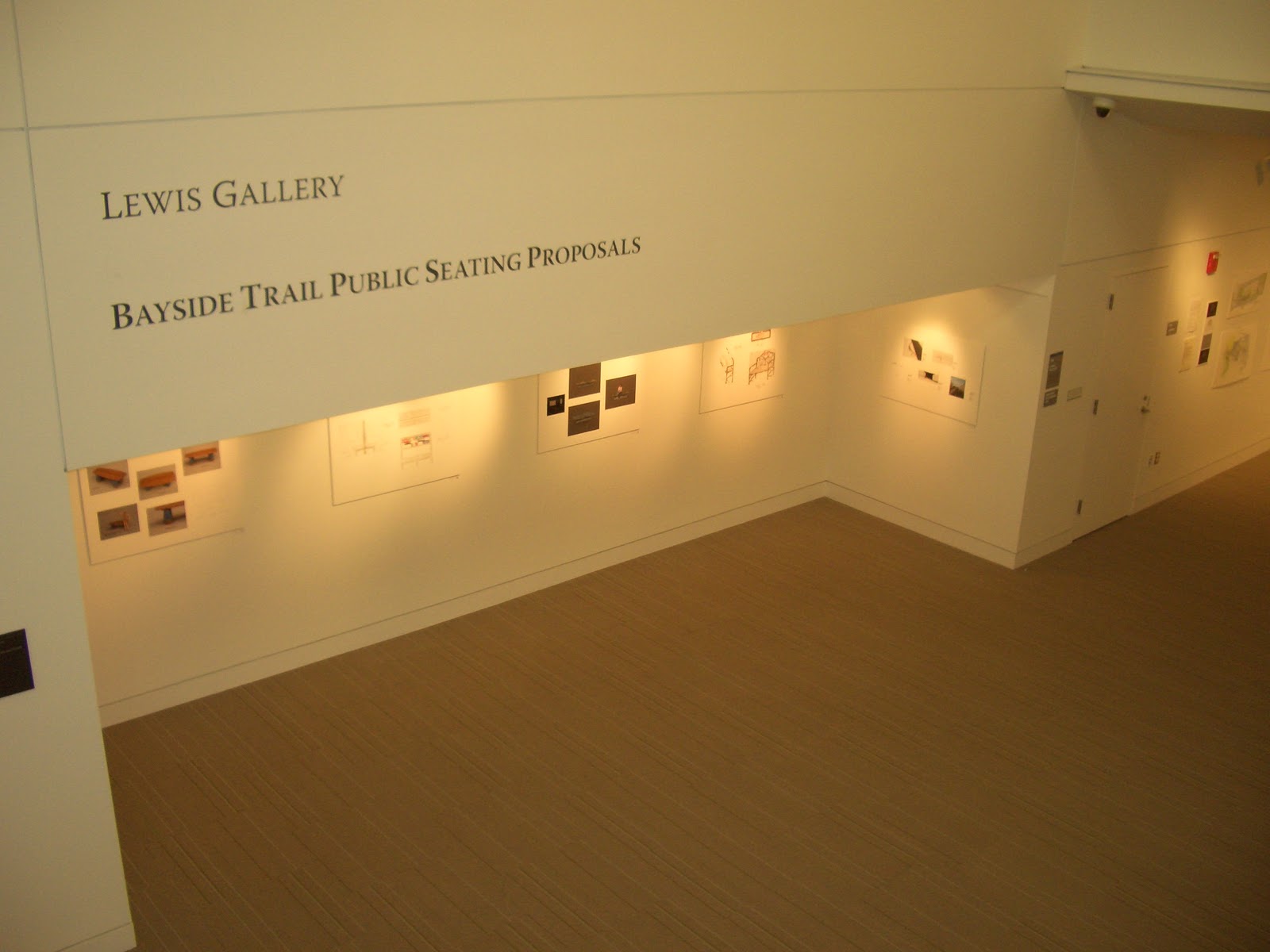
At a stereotypical level libraries are known for lending materials but our range of users and activities sometimes makes it difficult to deliver an elevator speech that captures it all. Through our efforts in the renovated Main Library since April, the Library is making a strong statement of identity by accepting and promoting the role of a cultural center.
Monday, August 30, 2010
Hang in There Seattle!
Last spring city and state budget seasons brought forth horror stories from all over the country regarding library service cuts. In the urban library systems the cuts proposed were very deep. The responses to try and meet the budget reductions were varied including closing branches, cutting collection budgets, shut down days, curtailment of schedules, etc. In Portland we had to close two of our branch locations (Reiche and Munjoy Hill) and almost a third (Riverton) which was saved at the last minute by a one year funding recommendation by the Finance Committee of the City Council. We were reminded this week that the cuts for many libraries will continue to play out during the year while away from casual observation. One of America’s finest library systems, Seattle Public Library, will close from today until reopening the day after Labor Day.
We at Portland Public Library exist in a true urban environment and it could well be argued, as a microcosm of a Seattle. I know what goes on in a week’s worth of PPL service to kids, businesses, families, neighborhoods, readers, technology users, etc. It is an astonishing range and amount of activity. In Portland we have managed to avoid the scenario facing Seattle but I can’t help but contemplate and commiserate with the people of Seattle and my library colleagues as one tries to calculate the human cost of a lost week. It matters.
We at Portland Public Library exist in a true urban environment and it could well be argued, as a microcosm of a Seattle. I know what goes on in a week’s worth of PPL service to kids, businesses, families, neighborhoods, readers, technology users, etc. It is an astonishing range and amount of activity. In Portland we have managed to avoid the scenario facing Seattle but I can’t help but contemplate and commiserate with the people of Seattle and my library colleagues as one tries to calculate the human cost of a lost week. It matters.
Subscribe to:
Posts (Atom)